Se afișează postările cu eticheta mare/sea. Afișați toate postările

luni, 23 noiembrie 2009

Poseidon / Poseidon

Cand eram mai mica, am primit de la sora mea o carte despre mitologia greaca. Erau povestile tuturor zeilor grecesti, povestea Minotaurului, a lui Hercule, a Centaturilor si multe altele. Printre aceste povesti era si cea a lui Poseidon, zeul marii, de curand (daca se poate spune asa), devenit si zeul cutremurelor. Din pacate, am pierdut acea carte si marturisesc ca nici nu am mai cumparat alta...rusine sa-mi fie. Dar am gasit cateva informatii despre Poseidon si iata ce se spune:


În mitologia greacă, Poseidon (greacă Ποσειδῶν) era zeul mării, fiul lui Cronos şi al Rheei. În mitologia romană este cunoscut sub numele de Neptun. Ca şi ceilalţi fraţi ai săi, când s-a născut, Poseidon a fost înghiţit de către tatăl său şi apoi dat afară.

Mai târziu a luptat alături de olimpieni împotriva titanilor. Când, în urma victoriei, s-a făcut împărţirea Universului, lui Zeus i-a revenit Cerul, lui Hades lumea subpământeană, iar lui Poseidon Împărăţia apelor. El sălăşluia în fundul mării împreună cu soţia sa, Amfitrite, alături de care, uneori, urmat de un întreg cortegiu marin şi purtat de un car tras de cai înaripaţi, spinteca valurile.

Poseidon stârnea furtunile sau făcea ca apele mării să devină liniştite, el scotea insule la iveală sau le cufunda pe altele lovindu-le cu tridentul său, făcea să izvorască râuri sau să se închege lacuri. O dată el a încercat împreună cu Hera şi cu Athena să-l pună în lanţuri pe Zeus, dar încercarea a dat greş. De atunci Poseidon a fost mereu alături de preaputernicul său frate care cârmuia destinele lumii.

Legat de numele său este episodul întrecerii care a avut loc între el şi Athena atunci când a fost să-şi împartă între ei pământul Atticei. Un alt episod îl înfăţişează pe zeul mării lucrând cot la cot cu Apollo, ca să înalţe zidurile Troiei. Faptul că nu a fost răsplătit pentru munca sa a atras mânia lui Poseidon asupra troienilor. Această mânie, şi faptul că Odysseus i-a ucis un fiu, pe ciclopul Polyphemus, l-a determinat pe puternicul zeu să-l urmărească pe erou cu răzbunarea sa, nimicindu-i pe rând corăbiile şi aruncându-l de pe un ţărm pe altul. Cu zeiţele sau cu muritoarele de rând Poseidon a avut numeroşi fii şi fiice, majoritatea înfăţişaţi ca nişte fiinţe monstruoase sau a căror forţă era de temut. Printre aceştia se numărau: ciclopul Polyphemus, gigantul Chrysaor, aloizii, Lamus - regele lestrigonilor, Triton etc. ( http://ro.wikipedia.org/wiki/Poseidon ).
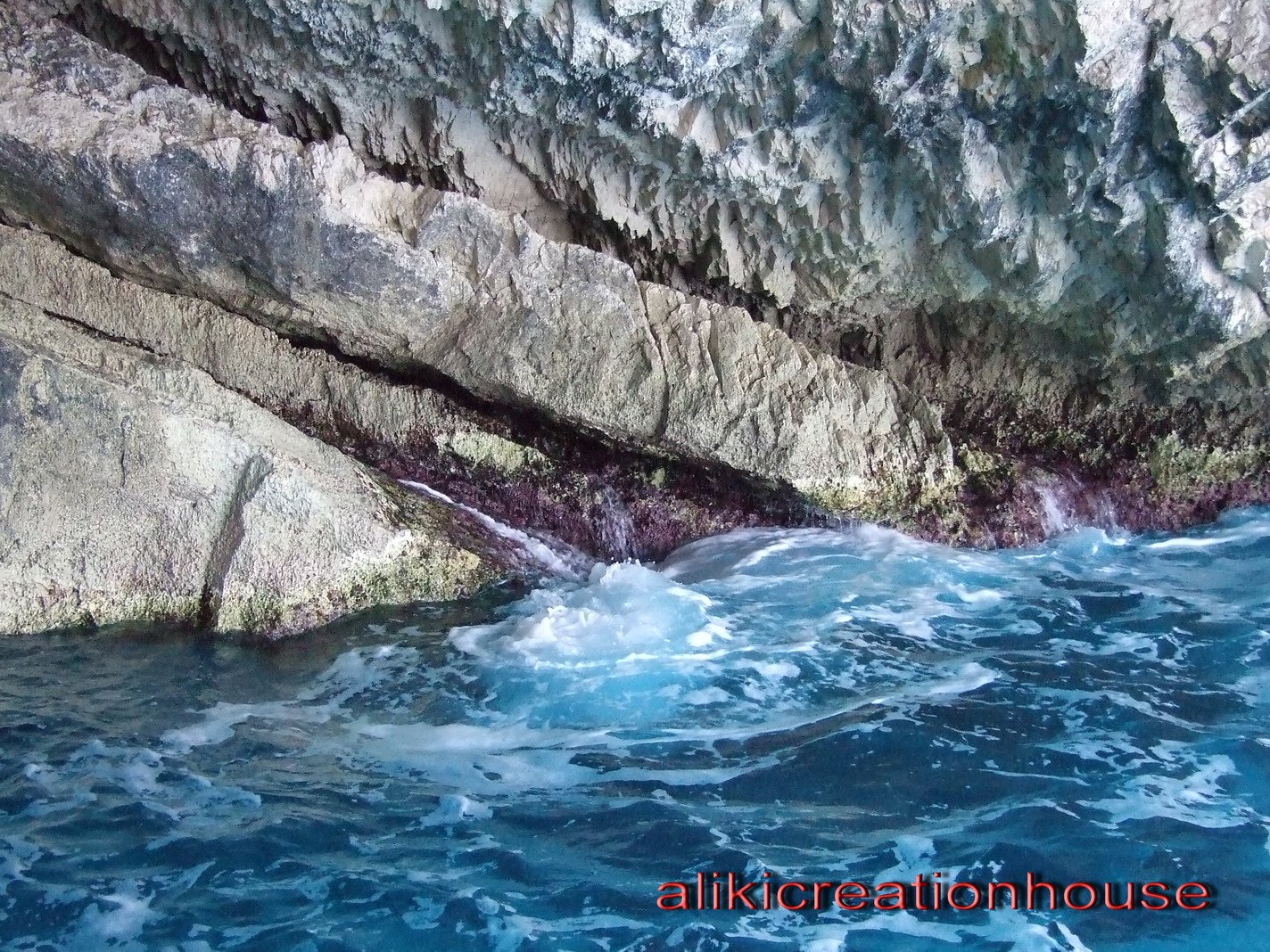
In Zakynthos exista o stanca sapata de valurile marii si ce pare a fi asemanatoare chipului lui Poseidon. De altfel, ghizii vor spune intotdeauna acest lucru, ca e chipul zeului marii.

English translation

When I was little, I received from my sister a book on Greek mythology. There were stories of all Greek gods, the story of Minotaur, the Hercules, the Centaturilor and more. Among these stories was and that of Poseidon, god of the sea, soon (if one may say so), became the god of earthquakes. Unfortunately, I lost that book and confess that I have not purchased another ... to be my shame. But I found some information about Poseidon and this is what it says:

In Greek mythology, Poseidon (Greek Ποσειδῶν) was the god of the sea, the son of Cronus and Rhee. In Roman mythology is known as Neptune. Like other brothers, when born, Poseidon was swallowed by his father and then fired.

He later fight with the Olympians against the Titans. When, after victory was dividing the universe, Zeus went to Heaven, underground world of Hades, and Poseidon's kingdom water. He dwelt in the sea with his wife, Amfitriti, with which sometimes followed by a full suite of marine and wore a chariot drawn by winged horses, cleave the waves.

Poseidon aroused sea storms or cause to become quiet, he was taking the island to light or other plunge them hitting them with his trident, rivers or springs was congeal lakes. Once he tried together with Hera and Athena to put Zeus in chains, but the attempt failed. Since then, Poseidon was always alongside his brother which governed the destinies of the world.
His name is linked to race episode that took place between him and Athena when it was to divide among themselves the land Attica. Another episode depicts the sea god working side by side with Apollo, to build the walls of Troy. The fact that it was rewarded for his work attracted the wrath of Poseidon on the Trojans. This anger, and that Odysseus killed one child on Cyclop Polyphemus, led by the mighty God to pursue the hero with his vengeance, destroying them one by one the ships and throwing him of a beach on the other. With the goddesses or ordinary womans, Poseidon had many sons and daughters, mostly depicted as monstrous beings and whose strength was feared. They include: Cyclop Polyphemus, the giant Chrysaor, aloizii, Lamus - King of lestrigons, Triton etc.
(Http://ro.wikipedia.org/wiki/Poseidon)
In Zakynthos there a rock carved by waves and what seems like Poseidon's face. In addition, guides will always say this, that is the image of the god of the sea.

Valurile marii / Waves


Toata lumea la bord / All aboard

Pe vapor / On the boat


Pe insula Zakynthos / On the island of Zakynthos


Navagio /Navagio


Plaja din altă lume

Nici o călătorie în Zakynthos nu e completă fără o plimbare până la Navagio, plaja cu nisipuri albe.
Cel mai cunoscut şi fotografiat loc al Insulei Zakynthos este Navagio (sau Aghios Georgios, nume pe care aproape că nu şi-l mai aminteşte nimeni, cu atât mai puţin să-l folosească cineva). Plaja cu nisipuri albe şi ape co­lorate într-un turcoaz intens, ce îşi pierd din intensitate cu cât se apropie de ţărm... Plaja pe ale cărei ţărmuri se odihneşte epava unui vas care, pe vremuri, transporta marfă de contrabandă, este cea mai recunoscută fotografie realizată pe o plajă din Zakynthos. Situată la 36,5 kilometri faţă de nordul ca­pitalei Zante şi la 4 kilometri vest de Volimes, este accesibilă doar de pe mare, fiind înconjurată de stânci înalte şi drepte, ce nu permit accesul direct.

PUNTE DE METAL.
Turiştii pot ad­mira priveliştea şi fotografia plaja doar de pe o pasarelă de metal, construită special pentru acest lucru. Fiind un loc sălbatic (în care elementele civilizaţiei nu îşi fac sim­ţite prezenţa), turiştii sunt sfătuiţi să-şi aducă provizii de apă şi mâncare, în caz ca vor să stea mai mult. Apa din jurul plajei este atât de rece încât nu este foarte indicat să ajungi înot. Iar dacă vrei să vezi epava, eşti sfătuit să o fotografiezi doar din exterior şi să nu te apropii prea mult, căci este periculos, din cauza nisipurilor care se pot afunda sub greutatea cor­pului. Accesul pe plajă se poate face cu vaporaşele ce vin regulat şi frecvent vara, din Zante, Laganas, Aghios Nicolaos sau din Porto Vromi, chiar dacă Navagio nu este destinaţia lor finală. Desigur, se mai poate ajunge la Navagio şi cu maşina proprie sau închi­riată din capitală, care se află la mai puţin de 37 de kilometri.

PLAJA DIN ALTĂ LUME.
Epava naufragiată de pe ţărm, arsă de soare, realizează un constrast uimitor cu nisipul alb. Navagio pare a fi o plajă din altă lume, căci în fiecare moment al zilei culoarea apei se schimbă dramatic, în funcţie de ce poziţie are soarele. Peisajul se schimbă complet, neputând fi comparat cu nimic, cu nici o altă plajă din lume. Eşti înconjurat de mii de culori, una mai caldă şi mai puternică decât celalaltă. Vizitând Navagio simţi că Dumnezeu a hotărât să-ţi dea un premiu... un premiu oferit cu drag sufletului şi minţii. Pleci, păstrând în minte imaginea atât de pură a acelui colţ de Rai.

articol publicat in Jurnalul National/ Suplimentul de turism

http://turism.jurnalul.ro/stire-jurnalul/plaja-din-alta-lume-513717.html

English translation

Beach from another world

No trip to Zakynthos is complete without a stroll to Navagio, the white sand beach. The most famous and photographed part of the island of Zakynthos is Navagio beach (or Aghios Georgios, a name that allmost nobody remember and use). Beach with white sands and turquoise water higly colored, wich had lost its intensity as it approaches the shore...Beach on the shores of wich rests of the wreck od a vessel, carrying contraband goods is the most recognized photograph made on a beach in Zakynthos. Located at 36.5 kilometers to the north of the capital Zante and 4 kilometers west of Volimes, is accessible only by sea, surrounded by tall cliffs and straight, wich does not allow dirrect access.

METAL DECK. Tourists can admire the view and photograph the beach on a metal bridge, built especially for this. Being a wild place (in which elements of civilization not make their presence felt), tourists are advised to bring food and water supplies, in case they want to stay longer. The water around the beach is so cold that it is not very wise to go swimming. And if you want to see the wreck, you are advised to shoot only from outside and not get too close, is dangerous because of sands that can sink under the weight of the body. Access to the beach can be done with regular and frequent little boat coming summer, in Zante, Laganas, Porto Vromi, Aghios Nicolaos, even if Navagio not their final destination. Of course, you can reach by car or Navagio and rented in the capital, which is less than 37 km.

BEACH from another world. Wreckage wrecked on the shore, sunburnt, made a striking contrast with the white sand. Navagio seems to be a beach from another world, because in every moment of the day the color of water change dramatically depending on which position is the sun. The landscape changes completely, can not be compared with nothing, with no other beach in the world. You are surrounded by thousands of colors, one warmer and stronger than other. Visiting Navagio feel that God decided to give you a prize ... a prize offered to drag the soul and mind. Go, keeping in mind the pure image of that piece of heaven.


article published in National Journal / Supplement to Travel
http://turism.jurnalul.ro/stire-jurnalul/plaja-din-alta-lume-513717.html